Despite ongoing challenges, including global conflict, energy sector strains, and a decline in Suez Canal revenues, HBSC's Williams expressed optimism about Egypt’s progress

Egypt’s economic reform program is showing early signs of success, positioning the country to benefit from shifting global and regional dynamics, according to senior executives from HSBC during a high-level client briefing in Cairo last week.
The briefing featured insights from Simon Williams, HSBC’s Chief Economist for Central & Eastern Europe, the Middle East, and Africa (CEEMEA), and Dr. Helen Belopolsky, HSBC’s Global Head of Geopolitical Risk.
Despite ongoing challenges, including global conflict, energy sector strains, and a decline in Suez Canal revenues, Williams expressed optimism about Egypt’s progress.
“Inflation is stabilizing, the currency is holding, the budget deficit is easing, and interest rates are starting to fall,” he said, noting these indicators reflect a country halfway through its economic adjustment. However, he cautioned that “ongoing policy discipline will be key to complete the process, particularly with Suez revenues, the energy sector under pressure, and geopolitical risks still unresolved.”
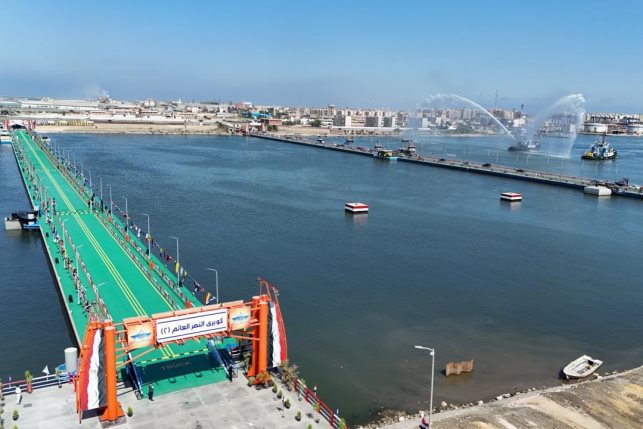
The Suez Canal, a vital source of national revenue, has recently seen a decline of around 60% year-on-year in 2024 to $7 billion, due to Red Sea shipping disruptions. But there are signs of recovery following security improvements, with vessels gradually returning to normal routes.
Held at HSBC Egypt’s head office, the event brought together nearly 100 business leaders and clients to discuss Egypt’s economic outlook amid persistent geopolitical headwinds and market volatility.
HSBC Egypt CEO and Deputy Chairman Todd Wilcox emphasized that market liquidity is improving and trade flows are beginning to shift. “New investors see Egypt as a manufacturing hub. This will help boost exports and reduce future foreign currency risk,” he said. “For 44 years, HSBC has been a trusted partner to businesses in Egypt, and our commitment to their growth and success remains steadfast.”
Belopolsky stressed that while global volatility persists, it also creates openings for adaptable economies. “As global geopolitical dynamics continue to evolve, it is increasingly important for businesses to adapt to persistent volatility,” she said. “With Egypt’s reform programme well underway, the country is strongly positioned to capitalize on the opportunities emerging from today’s shifting geopolitical landscape.”
She added, “Volatility is not going away—resilience will come from flexibility.”
The briefing also came shortly after the Central Bank of Egypt reduced key interest rates by 100 basis points in May, responding to decelerating inflation. Analysts view the move as part of a broader effort to create a more stable investment environment and support long-term growth.
According to HSBC, Egypt’s ongoing reforms, political stability, and strategic geographic position are enhancing its appeal to international investors, even as global uncertainty remains high.